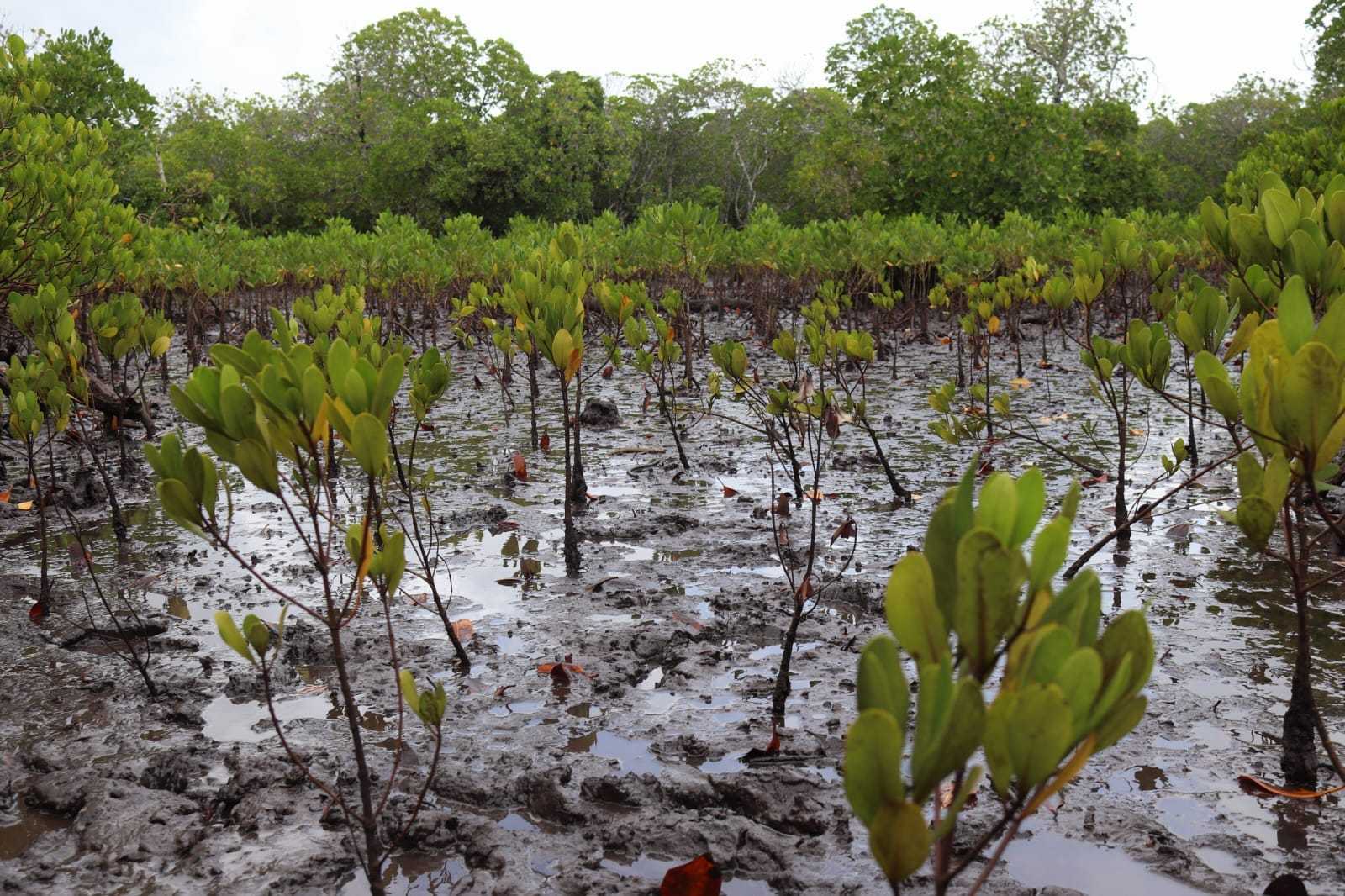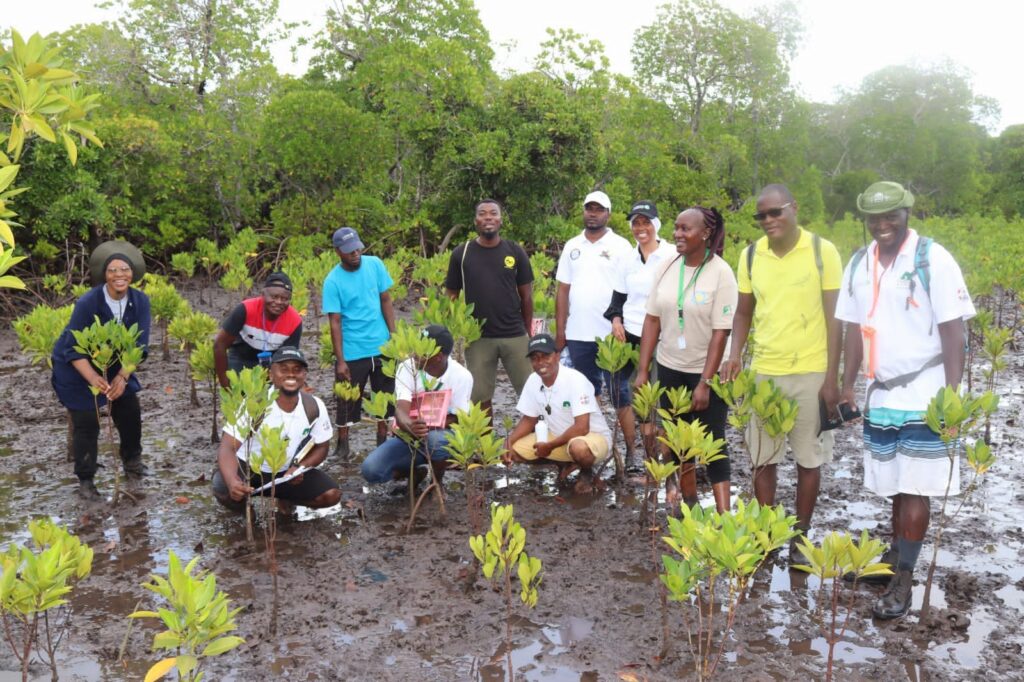
Kenya Forest Service staff led by the Principal Planning and Monitoring Officer Nafasi Mfahaya and, the Coast Conservancy Regional Forest Conservator James Mburu, and mangrove conservation actors have concluded an eight-day practical training on Community Based Ecological Mangrove Restoration (CBEMR) approaches.
Ms. Mfahaya, while speaking to the 83 participants, called for a deeper conversation among sector stakeholders so as to enhance successfully restoration of mangrove ecosystem. She said the conversation will inform strategic investment in mangrove restoration, address issues of duplication of intervention activities, and promote adoption of best practices in restoration.
The CBEMR is a community driven scientific-based restoration approach to mangrove restoration. It examines a wide range of factors including research of the proposed site’s hydrological factors, mangrove stressors, salinity levels, elevation, soil pH values among other factors. Additional considerations include researching social concerns that may include the site’s historical realities, ownership, access and control, community social needs, quality of leadership and community’s capacity to steer restoration initiatives.
This approach lays more emphasis on enabling the site to naturally regenerate, and presents replanting as a last option. It argues that improving the site’s conditions by implementing the correct changes to improve hydrology, remove stressors and support implementation of social changes enables faster healing, and take back of the site by pioneer mangrove species, and other mangrove species adaptable to the site conditions.
The CBEMR process also proposes guidelines for successful mangrove restorations through planting mangrove seedlings.
The training was convened in Faza Island, Lamu County by The Nature Conservancy and the Kenya Forest Service in collaboration with the Global Mangrove Alliance (GMA), Kenya Chapter.
The GMA, Kenya Chapter is led by TNC and consists of the World Wildlife Fund for Nature, Wetlands International and International Union for Conservation of Nature.
Mr. Mburu said mangrove restoration requires a defined scientific approach to ensure reasonable intervention successes. He said species matching as entrenched in the CBEMR process guarantees a higher positive percentage in restoration outcomes.
He urged mangrove conservation partners to take up the approach in their restoration effort. Furthermore, he noted the need for the Service to review collaboration agreements in order to align them to the CBEMR process.
The training that was led by the Mangrove Action Project (MAP) brought together representatives from members of coastal Community Forest Associations, community conservancies, civil society associations that are based in Lamu, Tana River, Kwale , Pemba, Zanzibar and National and County Government agencies.